
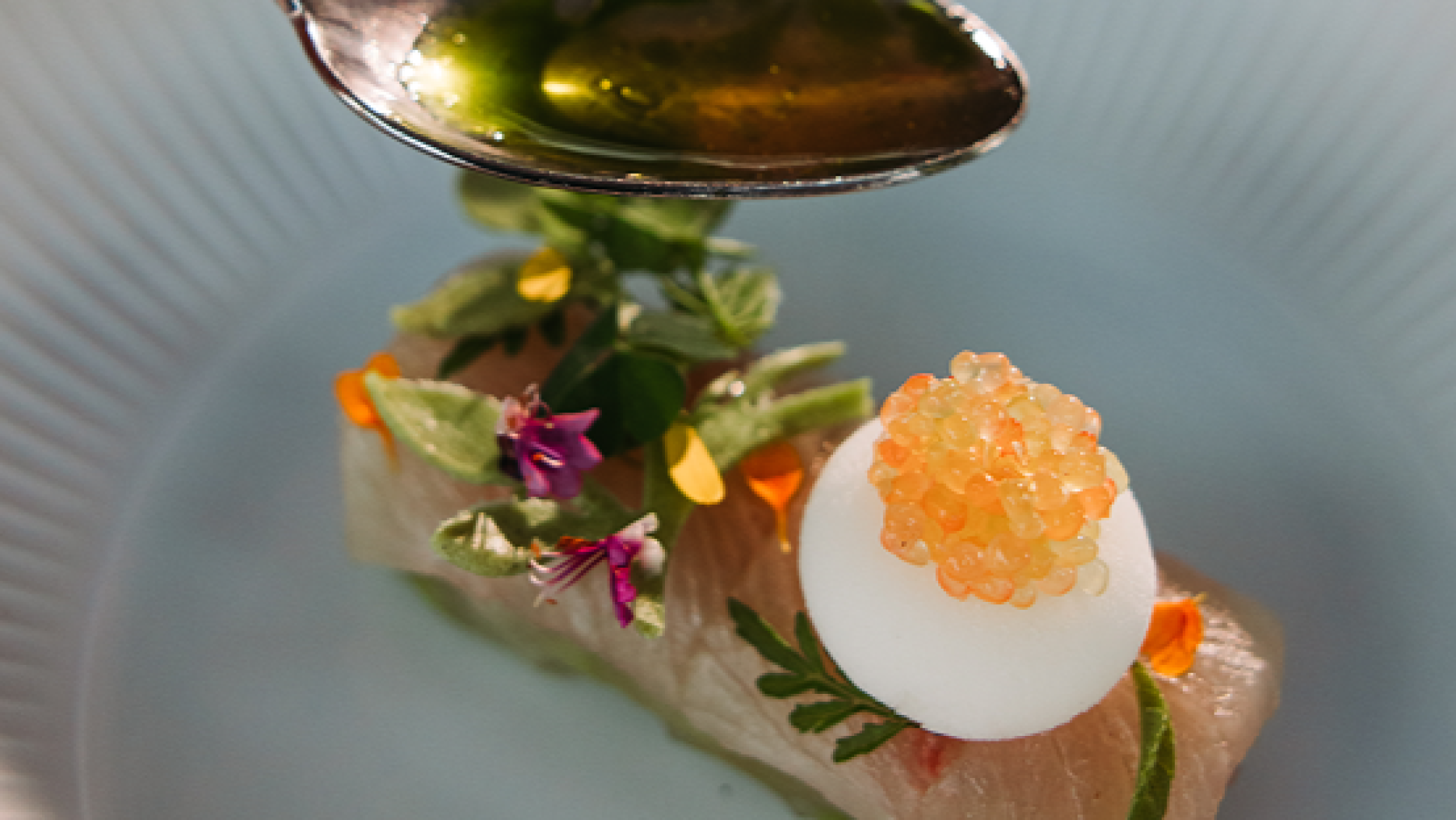
How Michelin kitchens build diverse menus from a single fish
A more practical path is to build real variety from one fish that performs across the menu. The Kingfish Company Yellowtail offers that balance of range and reliability.
The Kingfish Company raises Yellowtail on land in Zeeland in the Netherlands, using a recirculating aquaculture system. Conditions are managed all year, which supports steady quality and dependable supply. The operation runs on one hundred percent renewable electricity and the fish are grown without antibiotics or vaccines.
One Fish, Many Preparations
Yellowtail has enough natural fat to stay moist under high heat and enough structure to serve raw with a clean slice. On the raw bar it presents well as sashimi or as a simple Italian style crudo. A short kombu cure deepens savoury notes without softening the texture. A citrus led ceviche keeps its shape through service. A brief cold smoke adds aroma while keeping the flavour clean.
On the line it remains cooperative. A hot pan gives crisp skin and a tender centre. On the grill the surface caramelises while the middle stays moist. The collar, which is often overlooked, becomes a small highlight when roasted or broiled and finished with something bright. One species can deliver a series of dishes that feel different across a week’s service without changing the fish.
Consistency You Can Plan Around
Because farming happens on land, the team controls water quality, temperature, and biosecurity. That control reduces the guesswork that comes with wild supply. Year round production supports predictable grading and fewer last minute edits to the board. The company also notes the use of seawater in the system, which avoids drawing on scarce freshwater.
Independent Recognition
The Kingfish Company was the first seriola producer in the world to earn Best Aquaculture Practices certification. It was also the first recirculating aquaculture system to do so. The farm was the first in the Netherlands admitted to the Aquaculture Stewardship Council programme for yellowtail. These milestones matter when a dining room expects traceability and responsible sourcing.
A Practical Way to Build Variety
Guests recognise variety when a single protein appears in clearly different expressions. With The Kingfish Company Yellowtail that is straightforward. The loin slices are clean for raw service. A short cure or a light smoke creates a second, distinct profile.
On the hot line a fast sear or a careful grill gives a third direction with texture contrast. Running the collar for a small plate adds another experience while keeping the story consistent.
Working with one species focuses on prep and knife work. Planning around the whole fish reduces trim and keeps value in the kitchen. Most importantly, service stays steady because the fish behaves the same way every week. That steadiness lets chefs adjust technique and garnish to keep the menu fresh without growing the list of species in the fridge.
The Takeaway
Chefs do not need a crowded seafood list to keep guests interested. They need a reliable and versatile fish that supports change in technique and flavour while quality stays level.
The Kingfish Company Yellowtail is raised on land in the Netherlands, managed year round, powered by renewable electricity, grown without antibiotics or vaccines, and recognised by independent certification bodies. It gives kitchens a simple way to build real variety without unnecessary inventory.